Basil came from a family of remarkable holiness — his grandmother, parents, and several siblings are also venerated as saints — and studied rhetoric and philosophy in Athens before withdrawing for a time to live as a hermit and study monastic life across Egypt and Syria. Drawing on that experience, he wrote a monastic rule that continues to guide most communities of Eastern monks and nuns to this day.
As bishop of Caesarea, Basil defended the full divinity of the Holy Spirit against continuing Arian pressure, wrote extensively on Christian doctrine and social duty, and used his position to build a vast complex outside the city providing food, shelter, and medical care for the poor, the sick, and travelers — an early model for what would become the Christian hospital. He is honored as one of the three Cappadocian Fathers and a Doctor of the Church.
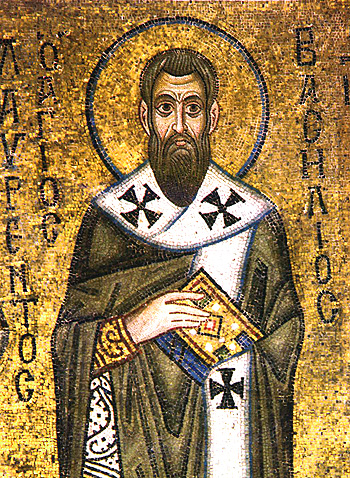
Saint Basil the Great
Bishop and Doctor of the Church
A bishop of Cappadocia who shaped Eastern monastic life, defended the divinity of the Holy Spirit, and built one of the earliest large-scale charitable institutions for the poor and sick.
- Born
- 330
- Died
- 379
- Birthplace
- Caesarea, Cappadocia (modern Turkey)
- Died in
- Caesarea, Cappadocia (modern Turkey)
- Country
- Turkey
- Century
- 4th century
Why People Pray to Saint Basil the Great
Saint Basil the Great is invoked by monks, by those who care for the poor and sick, and by anyone seeking to unite prayer with practical charity.